

No, the Detroit Lions did not trade for Myles Garrett last week. Nor did they sign Trey Hendrickson after backing out of a Maxx Crosby trade.
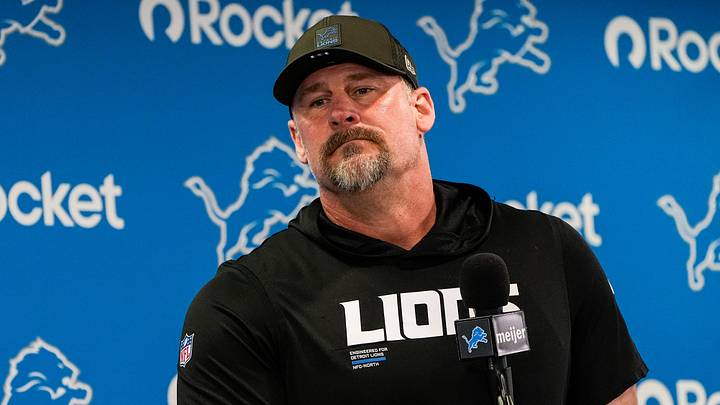
That may not seem like a team that views the pass rush as a "priority" to many in its fanbase, but head coach Dan Campbell insisted as much during his presser last week. Still, that priority remains shared with the run defense.
"We certainly wanted to see if we can add a little bit of juice in there on the perimeter," Campbell said, "but also in the middle." Campbell later added, "I think (pass rush is) a priority, but it’s still a priority when we talk about first, second down, stopping the run, and then the transition to (the pass rush).”
What does that entail, and how did that shape the Lions' approach to addressing the pass-rushing role this offseason?
"Now, what that requires, if you're going to add a couple of these guys, that maybe their strength is a little more in the rush game, then they got to be able to hold up in the run game, or we can't get them to the game, you know, they have to be able to hold on and do some of those things. So, your niche has got to be your niche, and the other stuff, you've got to be able to show you can hold your own, at least. You don't have to be dominant."
It takes more than just sacks, pressures, and quarterback hits. The Lions were borderline elite in those regards last season, mostly thanks to Aidan Hutchinson. Yet, the Lions' defense struggled overall, and we entered this offseason once again hoping that general manager Brad Holmes would make a move for a top EDGE.
One reason for those struggles was the drop-off in run defense from last season. Lions' defense ranked 14th in rushing yards given up per game after finishing fifth in 2024. A healthier Alim McNeill should help with that this season, but it'll take more than just McNeill to get the run defense back to where it was before his injury in 2024.
How does that tie into the pass rush? A good run defense and interior defensive line, especially on early downs, leads to more predictable passing situations. Those linemen can overpower offensive lines or hold their blocks, giving pass rushers a cleaner and faster path to the QB.
Why do the Lions want pass rushers who can defend the run?
A pass rusher who is capable in both the pass and the run adds versatility to the defense compared to a more one-dimensional/predictable pass rusher. Al-Quadin Muhammad, for example, was efficient with his 11.0 sacks last season, but only 18.16% of his 457 snaps were in run defense, per Pro Football Focus. Most top pass rushers will typically be in the 33-40% range, such as Hutchinson at 37.21%, which can come naturally when you play close to 100% of all defensive snaps.
Offseason signee D.J. Wonnum is not a 100% snap guy, but he played 39.39% of his 688 snaps in run defense. Wonnum may never reach Muhammad's 11.0 sack number, but he's on the field far more. Not to mention the footwork, strength, and positioning required to play run defense can also translate to pass-rushing play, which requires agility, speed, and deceptiveness to get to the QB.
This all can provide defensive coordinator Kelvin Sheppard more creativity in how he uses Wonnum, as well as other positions like interior linebackers or nickel corners.
READ MORE: This Lions UDFA could threaten the EDGE depth chart in camp
The Lions aren't all in on run defense, however. They did trade up for Michigan's Derrick Moore in the second round. Moore's 11 sacks were 16th in the nation among EDGE defenders, but in accordance with the Lions' defensive philosophy, Moore played 41.36% of his 440 snaps in run defense as a part of a loaded Michigan defense.
Campbell's idea of "priority" may not align with much of the fanbase, but he understands it takes more than flashy numbers to get ahead. Garrett, Hendrickson, and Crosby would've all been phenomenal additions, but that doesn't mean the Lions didn't put in the effort to reshape their pass rush.
 Add us as a preferred source on Google